
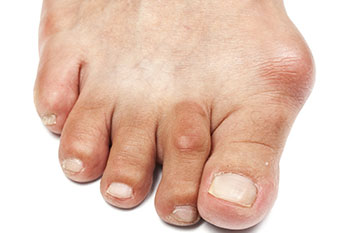
If you have arthritis, frequently wear tight fitting shoes such as high heels, and are older in age, it’s very likely that you may develop a bunion. A bony hump at the base of the big toe is the biggest sign that you may have developed this condition. Bunions are often painful and typically cause an extreme amount of discomfort. Because a bunion protrudes on the side of the foot, it’s likely for it to continuously rub against the inside of your shoe. This causes frequent friction and pain, which may cause calluses to form as well.
There are a number of ways to help alleviate discomfort if you’re experiencing pain due to having a bunion. To begin, it’s important that you maintain a healthy body weight in order to lessen the pressure put on your feet. Icing and warming the affected area may also help ease pain, as well as wearing wider-set footwear to avoid friction between your shoe and bunion. Some patients have also found shoe inserts to be extremely helpful for correcting the position of the foot. In more serious cases where the pain is severe, a podiatrist may recommend surgery for treating the bunion.
If you would like more information on how to best treat your bunion, we recommend you consult with a podiatrist as soon as possible for professional care and a proper diagnosis.


